

What’s the Difference Between a Poster and a Fine Art Print?
When shopping for wall art online, you’ll see a wide range of terms: posters, prints, canvases, downloads, limited editions. It can be hard to tell what’s marketing language and what actually matters. One of the most common questions we get at Dune is: what exactly is the difference between a poster and a fine art print?
The short answer? It comes down to materials, process, and intention.
Let’s break it down.
Posters: Mass-Produced, Budget-Friendly, Short-Term
Posters are typically designed for affordability and high-volume production. They’re printed on lightweight paper (often with a gloss or semi-gloss finish), which keeps costs down and makes them easy to roll, ship, and replace. Posters are usually printed using standard commercial printers with less emphasis on archival quality.
They’re great for:
Dorm rooms or rentals
Trend-driven or seasonal decor
Tight budgets or temporary use
But if you're looking for lasting quality or a more refined aesthetic, posters usually aren't built for that. The paper may yellow or curl over time, and the inks aren’t always fade-resistant. Posters can serve a purpose—especially when budget and flexibility are the goal—but they're generally not designed to stand the test of time.
Many posters you find online or in stores are also downloaded from generic image banks, meaning there may be thousands of copies circulating in other homes, offices, or dorm rooms. That doesn't make them less enjoyable, but it does mean they often lack the uniqueness or craftsmanship of original fine art.
Fine Art Prints: Archival, Intentional, Made to Last

Fine art prints, by contrast, are created with longevity and visual integrity in mind. They’re often printed on heavyweight, museum-grade papers using pigment-based inks. These materials are designed to preserve the image’s tone, contrast, and detail over time—often for decades without noticeable fading.
What sets a fine art print apart is also the process. At Dune, for example, every image begins as an original photograph (many captured on 35mm film), and is edited with restraint to maintain the feel of the place it came from. Each file is prepared at high resolution to support printing at a range of sizes without losing clarity or depth.
Fine art prints are ideal for:
Permanent wall installations
Framed art with or without mounts
People who value tactile quality and subtle detail
Spaces designed around calm, simplicity, or organic texture
One of the key differences is in how the artwork interacts with its environment. Fine art prints aren’t just visual fillers. They’re objects that carry presence—whether that's through the mood of the image, the depth of the print, or the feeling they create in the room.
Can a Digital File Be a Fine Art Print?
Absolutely. At Dune, our work is offered exclusively as high-resolution digital downloads, but they are very much fine art prints. Why? Because they meet the same standards:
Original artwork, captured and curated by a small team of working photographers
Archival-level resolution, with files that print cleanly and beautifully at multiple sizes
Intentional curation, with collections that are small, rotating, and designed to last
We also provide guidance on how and where to print—whether it's through a trusted lab like IOLabs, The Print Space, or Artifact Uprising, or at home with quality paper and a pigment-based printer. Our goal is not just to offer images, but to make sure they translate beautifully into physical form.
Digital doesn't mean disposable. With the right approach, a digital file can result in a final print that’s every bit as rich, durable, and compelling as one from a gallery.
What About Price?
Another major difference is cost—and it’s where things get nuanced.
Posters are typically priced very low because they’re inexpensive to produce. You’ll often find options under $20, and for some people or purposes, that’s exactly the right fit. Fine art prints, on the other hand, are generally priced higher—especially when printed, framed, or sold in limited runs.
At Dune, we believe in striking a balance. By offering digital-only fine art, we cut out unnecessary production costs while still delivering imagery that meets the highest quality standards. You receive the same artistic integrity without the gallery price tag. It’s our way of making fine art more accessible—without compromising on intention or beauty.
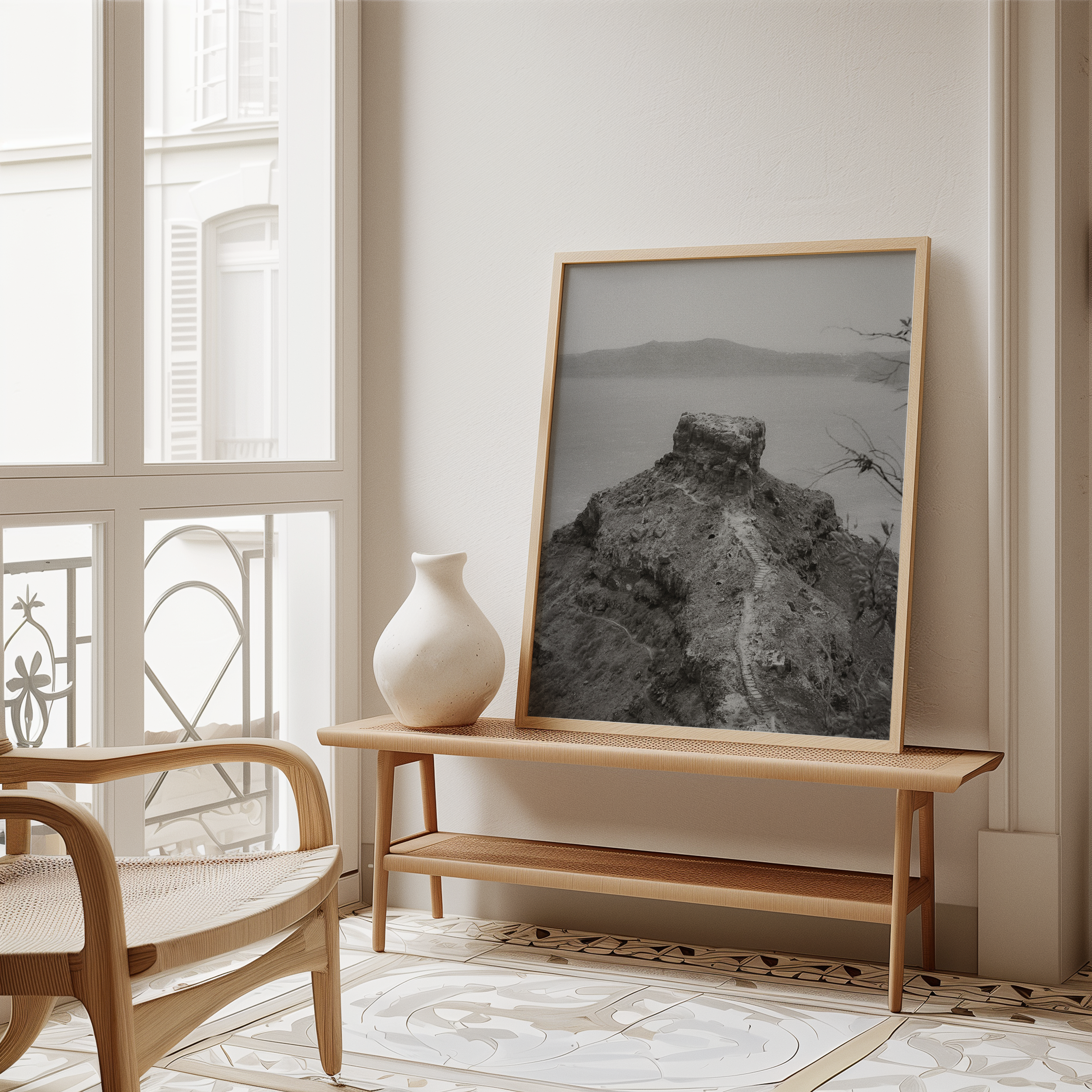
Our print, Monument, as seen in our Mountains collection.
What to Look for in a Fine Art Print
If you're investing in a fine art print—whether digitally or in physical form—there are a few things worth checking:
Provenance: Is the work original? Can you trace it back to the artist or studio?
Resolution: Is the file high-quality enough for large-format printing without blur or pixelation?
Paper recommendations: Does the artist or shop provide guidance on printing methods?
Stylistic cohesion: Is the collection thoughtfully curated, or just a wide catalogue of styles?
Fine art should feel personal. Whether it’s a landscape that reminds you of a place you’ve been, or an abstract composition that brings a certain calm, the goal is for the piece to create lasting connection—not just fill a gap on the wall.
Final Thoughts
The term "poster" often signals mass-market. The term "fine art print" signals care.
Neither is inherently better—it all depends on what you're looking for. But if your goal is to bring something lasting and meaningful into your space, it’s worth knowing what you’re investing in.
We believe in fine art that doesn’t come with a gallery price tag. That’s why we created Dune: to offer beautifully made, thoughtfully photographed prints that are accessible, downloadable, and ready to live with you.