

What Inspired Our Mountains Series (And Where It Took Us)
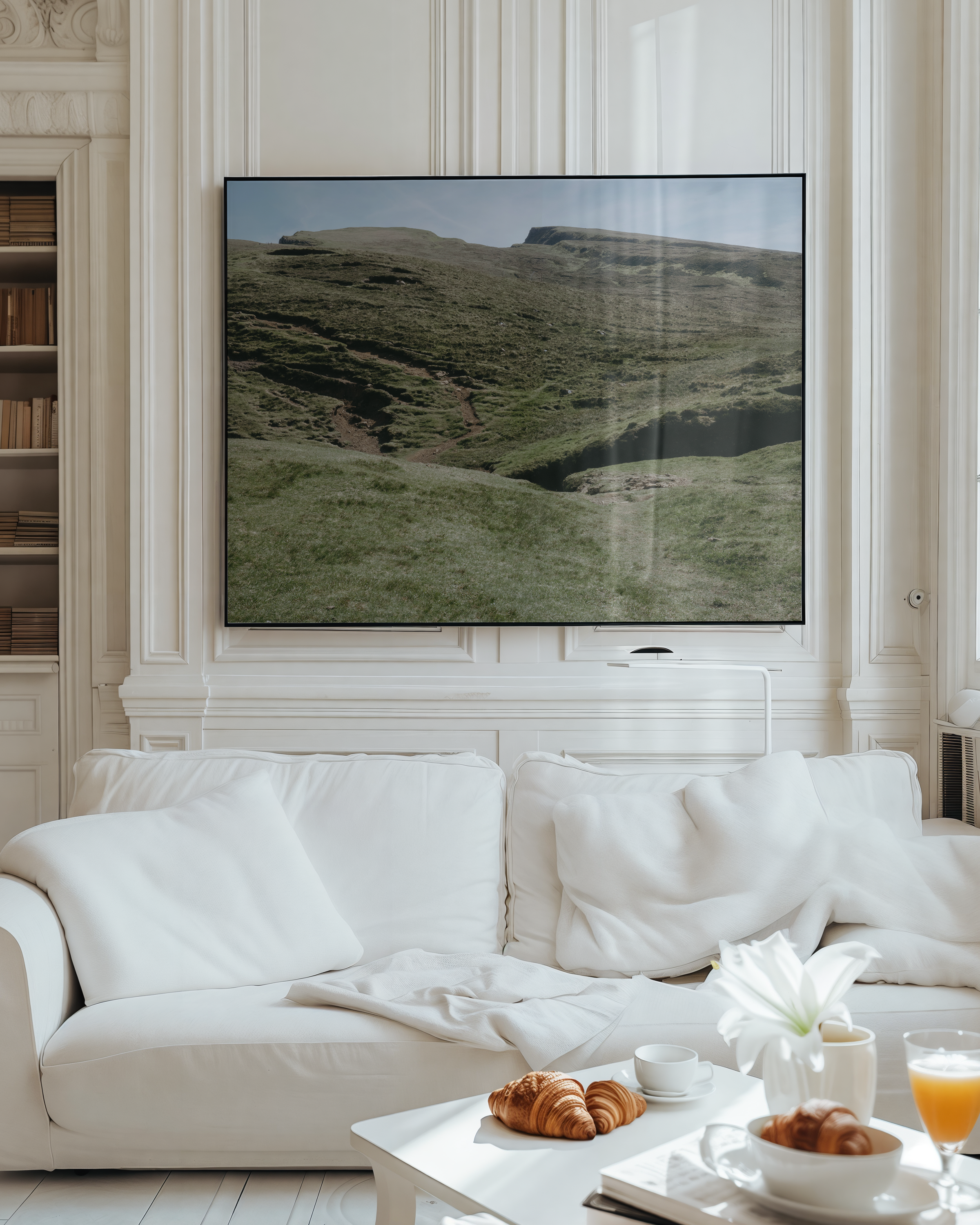
Our print, Ascent, from a recent trek into the Highlands of Scotland.
The Mountains collection was born from a need to breathe.
Not metaphorically, but quite literally. After seasons of travel in dense cities, humid coastlines, and tight timelines, our team found itself pulled toward elevation—toward spaces that felt expansive, stripped back, and strangely grounding. The first images were made without an agenda. Just cameras packed on hikes, film loaded at the edge of a trail, and a quiet curiosity about what happened when the pace slowed down.
It started in Scotland.
We'd travelled to the Highlands during a shoulder season when the roads were empty and the skies unreadable. Our gear stayed in backpacks most of the time. But on a few days, the clouds split open. There was Glencoe, softened by fog. Sheep standing like sentinels on the hillside. A single tree rooted beside a stream. And a rhythm to the landscape that made everything else feel unhurried.
That's when we realised we weren’t just collecting beautiful views. We were documenting stillness.
The Mountains series isn't about summits or epic peaks. It’s about scale, yes—but emotional scale. These are images of ridgelines, erosion, and worn paths. They reflect time more than they do drama. Where the coastlines in our Sandscollection move with light, the Mountains work settles. It stays with you.
The Places
The series began in the Scottish Highlands, but it grew from there.
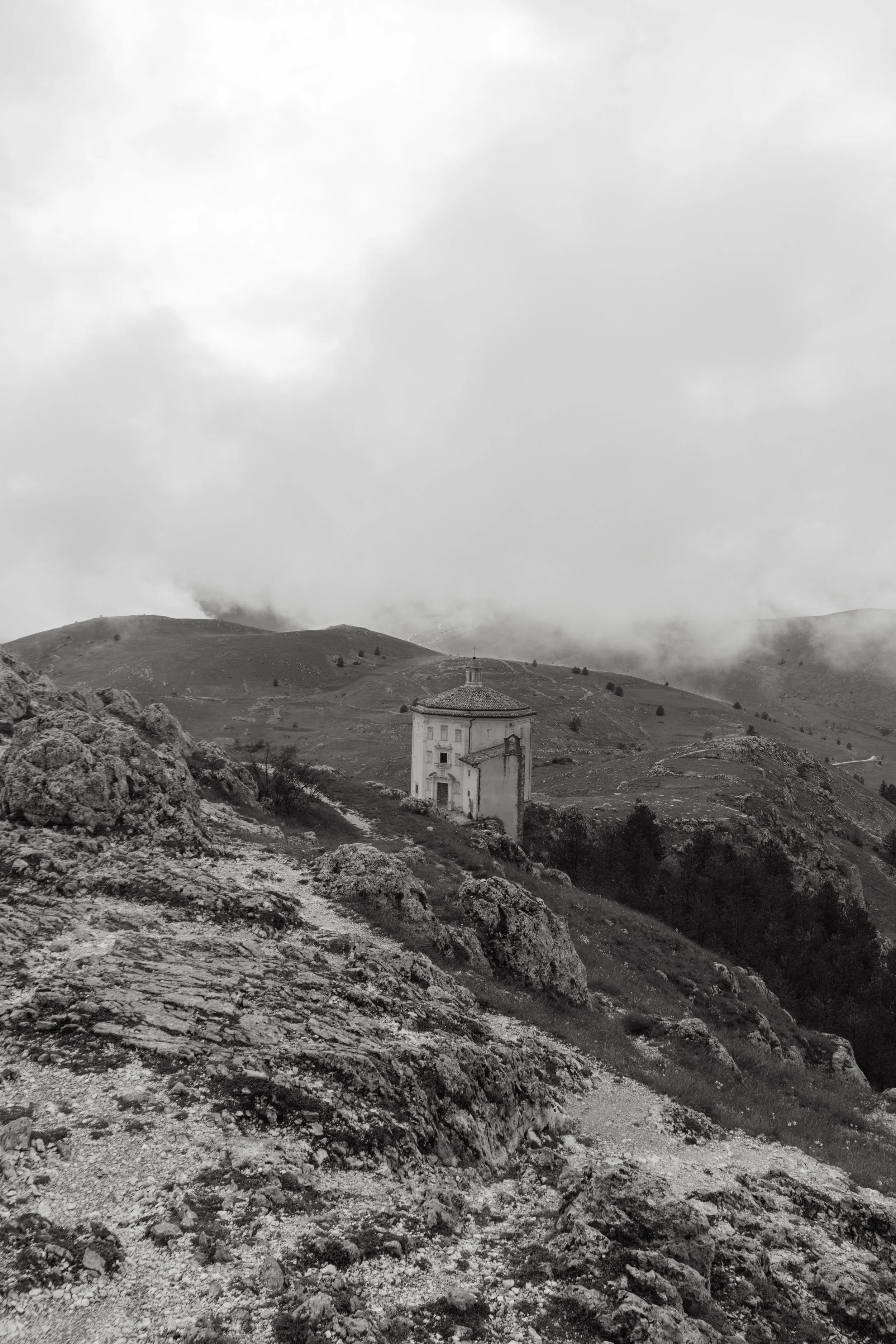
In Italy, we hiked out of Santo Stefano di Sessanio—a medieval town tucked high in the Apennines. There, we found a solitary chapel, half-covered in mist. In Umbria, a farmer’s paddock revealed two white horses in the middle of a slow afternoon. And in Northern Italy, among rain-washed hills, we met another. There is a kind of rural poetry to these places, but the images aren’t romantic. They’re observational. Quiet. Present.
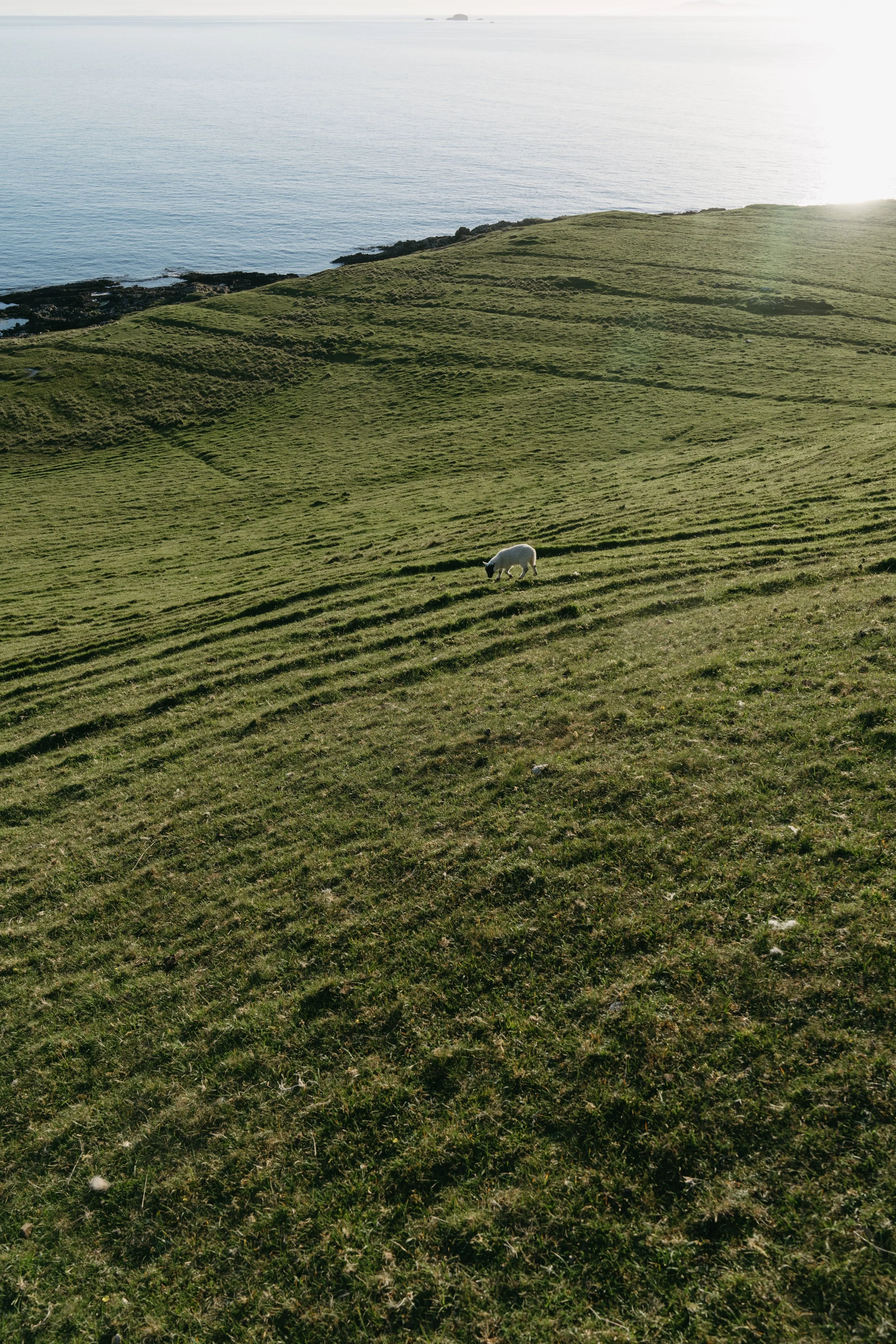
In the Isle of Skye, we encountered wind. A lot of it. But also a sense of solitude that gave way to alertness. That’s where Watch was taken—three sheep framed against the curve of a distant slope, caught mid-pause. The image is black and white, but what we remember is the sound: nothing but wind and wool underfoot.
In Glencoe, we found a tree standing alone near a stream. There was nothing special about it. And yet it’s one of the most complete images in the collection. Just balance. Stillness. A scene that doesn't need explaining.
This is the root of the Mountains series: not grandeur, but presence. What it feels like to be somewhere expansive and realise you don’t need to fill the silence.
The Process
All of our images are captured by our in-house team, across film and digital formats, depending on the light and location. In the Mountains series, most of the photographs were shot on 35mm film. Not to be precious, but to slow down. Film forces us to be intentional. To take the shot once, maybe twice, and move on. No spray, no excess.
And when you’re surrounded by stillness, it feels only right to approach the work that way.
We use high-resolution scans to preserve the texture of each frame—the slight grain, the softness in the shadows. The result is imagery that feels tactile and lived-in, even before it’s printed.
All of our work is delivered as digital downloads. This choice allows us to offer fine art photography that’s accessible, flexible, and designed to live with you in a real way. No galleries. No exclusivity. Just honest work, carefully made, and ready to be printed in your space.
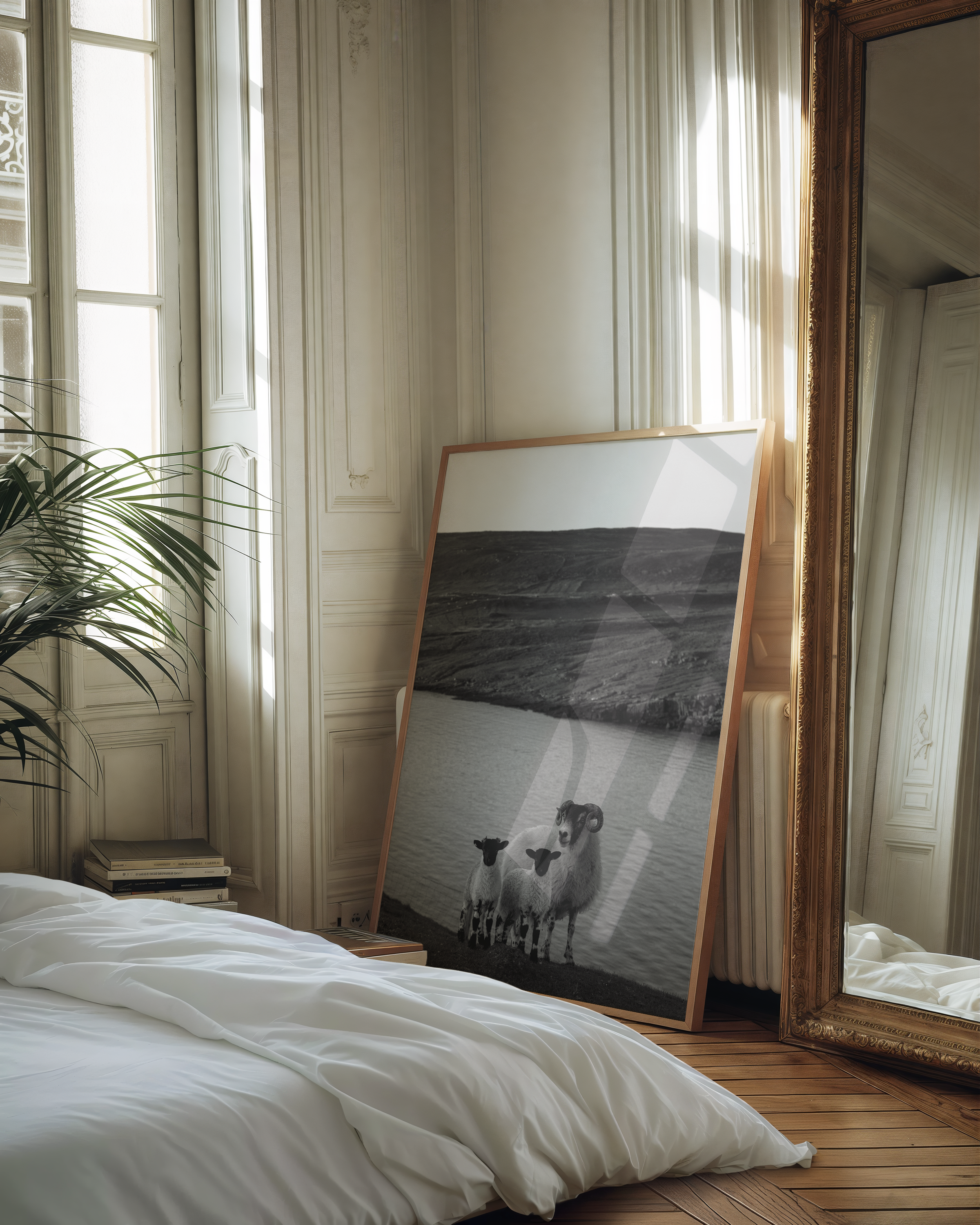
The Why
The Mountains series is for those who are drawn to stillness. To open space. To something unhurried.
There’s no narrative being forced here. Each image stands alone. Maybe one reminds you of a place you’ve been. Maybe another pulls you toward a landscape you’ve never seen. But none of them require explanation.
And that's the point.
This work is about presence. The kind that comes from altitude and absence. The kind that asks you to take a second look. Or to stop entirely.
We made the Mountains series because it was what we needed to see. And now, we hope, it’s something you want to live with too.